
Bank Statement Loans: When Traditional Financing Doesn't Fit
Many successful business owners have strong incomes but lack two years of job history. Read how bank statement loans work, when to use them, and why they might be a smart move.
.png)
Bank Statement Loans: When Traditional Financing Doesn't Fit
The Challenge
A successful business owner with decades of experience in his industry decided to start his own company. The timing was right. The market opportunity was clear. The only problem: he couldn't qualify for traditional financing.
Why? He couldn't provide two years of tax returns from his new business.
Despite having a strong financial position, solid income, and a clear track record in his industry, conventional lenders had one inflexible requirement: two years of business history. He was short by about 18 months.
He had two choices: wait another year and a half, or find an alternative.
The Solution: Bank Statement Loans
Instead of waiting, we explored a bank statement loan, a non-qualified mortgage product designed for borrowers who don't fit traditional lending boxes.
Here's how it works:
We analyzed 24 months of bank account activity, deposits, balances, and transaction history, and used that data as qualifying income. The borrower's bank statements proved he had consistent deposits and financial stability. This alternative financing option allowed us to approve the mortgage based on actual banking behavior rather than historical tax returns.
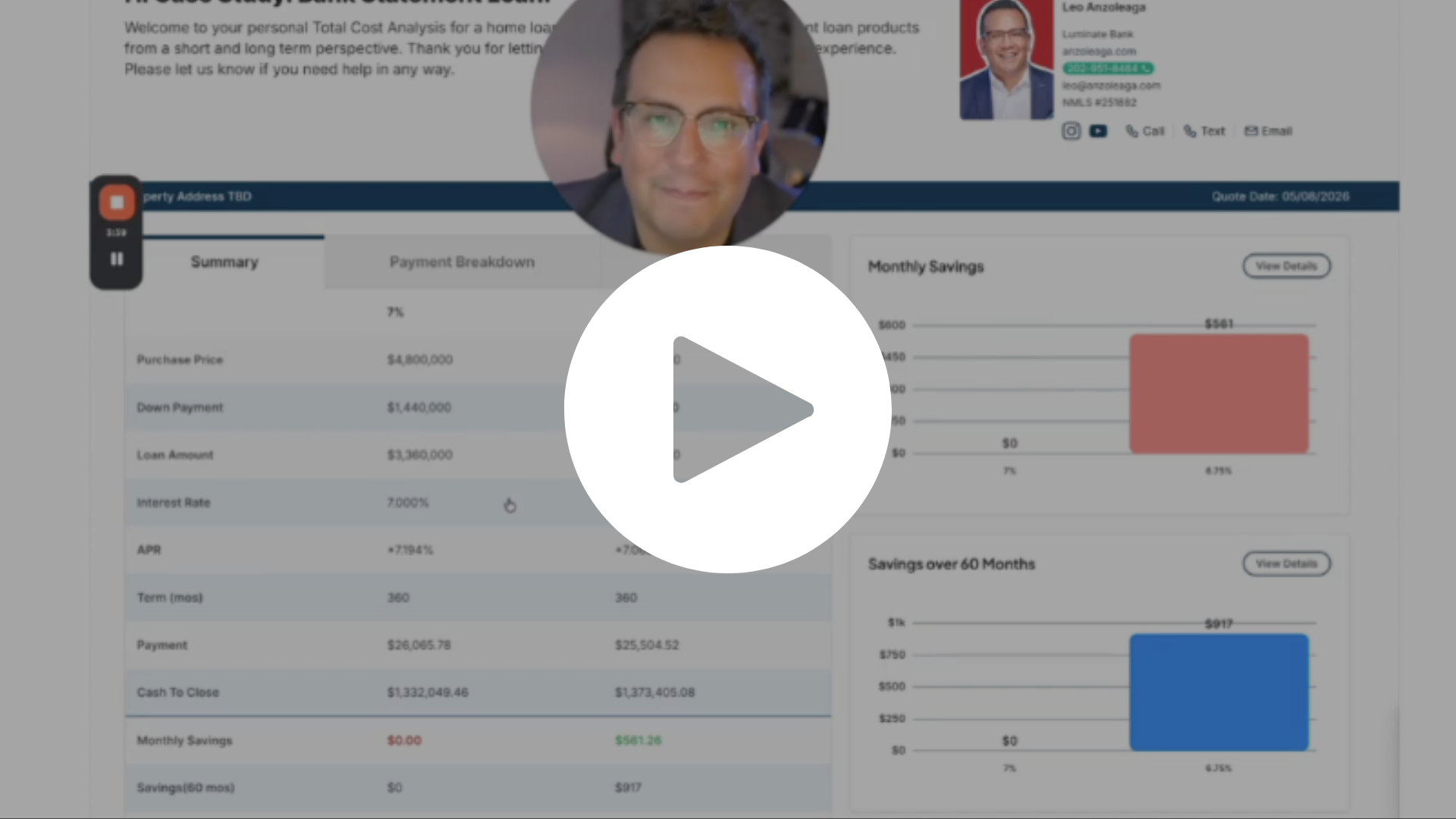
Watch the full case study here:
Why This Mattered
The client needed to expand his home for his growing family. He had the financial capacity to do it. But waiting another year meant:
- Losing a real estate opportunity when the market was right
- Delaying his family's needs
- Potentially liquidating investments to pay cash (and stopping the compounding effect of interest)
By using a bank statement loan, we gave him a third option: move forward now without disrupting his investment strategy.
The Trade-Off
Yes, the rate on a bank statement loan is higher than traditional financing. But we ran the numbers with the borrower:
What's the effective cost of paying a slightly higher rate versus liquidating market investments and losing years of compounding growth?
In this case, the answer was clear: the bank statement loan was the smarter financial move.
The Result
The client closed on his home expansion without touching his investment portfolio. His money kept working for him. His family got the space they needed. He kept moving forward instead of waiting.
When to Use Bank Statement Loans
- Recently self-employed or business owners with less than 2 years of tax returns
- Professionals with complex income (multiple income streams, commission-based)
- Borrowers with strong cash flow but non-traditional income documentation
- Situations where liquidating investments doesn't make financial sense
What makes our approach different: We manage bank statement loans in-house. We control the underwriting, the funding, the entire process from start to finish. No brokers. No handoffs. No delays. Just direct access to an alternative financing solution that actually works for busy business owners.
If you have clients in these situations, I would love to help. Let's explore whether a bank statement loan is the right strategy for their specific circumstances, email me at Leo@Anzoleaga.com to learn more.
Increase your Mortgage Under Management
Join our program and begin enhancing the way you advise clients on their mortgages and more today.